The transition from the freedom of summer to the routines of the school year can be difficult, even for teachers. During the summer, I can wake up whenever my body decides I've had enough sleep. I can eat when I'm hungry. I can read when I want for as long as I want. I can talk... or not.
Students, too, have this transition.
They, and I, have to build stamina to do the hard work of learning and growing.
The kids have to get used to using their Level 0 or 1 voices during the literacy studio and I have to get used to talking to both the whole class and small groups, and more importantly, giving ample wait time. We all have to get used to eating lunch later than we might like and waiting longer than we might like to go to the bathroom.
We often think about building stamina within the definition of the literacy block. At the beginning of the school year, students and teachers work on building stamina in silent reading. Each day the students should be able to read without getting distracted for a longer period of time. We might also talk about writing stamina - the length of time a student can write, which hopefully gets longer each day.
I've had to do some serious thinking about my classroom management and stamina this week. The things that worked for me last year don't seem to be working this year. I need to really take a step back and do some kid-watching in order to make decisions about changes we (because it will take BOTH the kids and me to change things) need to make in order to create an environment conducive to learning. I have to remember that when I think about last year, I am remembering END of the year third graders, but the kids who are sitting in front of me are BEGINNING of the year third graders. Some of them are just now turning eight. I have to remember to cut us all some slack as we adjust to each other and build our learning community.
So tonight as I sit here thinking about the year so far, I am kind of ok that I need to make a course correction. If I thought things were PERFECT, I'd be deluding myself. Instead, I need to be realistic but also pragmatic. I need to remember that this school year is a marathon and not a sprint.
And marathoners need stamina.
Showing posts with label third grade. Show all posts
Tuesday, August 29, 2017
Thursday, August 17, 2017
The Decisions Series: Knowing When to Turn Off the Light and Shut the Door
Today at 5pm, I turned off my classroom lights and shut my door. This was the last thing I saw as I left my room:
I felt a sense of satisfaction as I walked through the door. I GOT the job done, and now I get to enjoy my last weekend of summer before I meet my new students on Monday during Meet the Teacher and then on Tuesday when classes start.
I won't lie... I spent a LONG time getting my room ready for 2017-2018. Since early August, I have spent an hour or two (or three) almost every day unpacking Rubbermaid bins, reorganizing and refurbishing my classroom library, arranging furniture, making my classroom decorations, pumping yoga balls, making lists, and making plans. I met with my new classroom assistant (whose kids I had when I taught 7th grade) and met with the preservice teacher who will be joining me for her fall semester clinical.
But there comes a time when you have to decide you're finished - or at least finished enough. Teaching is a profession that can easily consume you if you let it. There is always that pressure to do one more thing, read one more book, complete one more form, grade one more paper. I had to learn early in my career that it didn't do me any good to stay at school until 9:00 at night. And once I had kids, I had no choice; I had to leave in time to pick them up from daycare, get them fed, and get them to bed. I had to learn what I could reasonably do in the time I had and just be okay with leaving things unfinished.
People talk about work-life balance. I'm not sure such a thing is ever truly possible, at least not for me. When I'm at home, I'm thinking about school, and when I'm at school, I'm thinking about all of the things I need to do at home or all of the places I have to drive my daughters. If I'm caught up at school, then my house is a mess and vice versa. When I see people who seem to have it all together, I wonder how much is real and how much is a great cover, put on because of pressure to be perfect.
So here's how I come as close to balanced as I get:
Ever since Molly was in Kindergarten, I have taken the Friday before school started and we've done something together. When the kids were little, that meant heading downtown to the American Girl store and having brunch in the restaurant followed by some shopping. Now that they've moved past dolls, we go to a museum or head to Woodfield to finish up our back to school shopping. It doesn't matter what we do; it matters that we're together. This is non-negotiable.
So is EVERYTHING finished for my first week of school? Mostly. I have a few things I'll do this weekend, but they're small. Do I feel ready? Mostly. I've never in my career felt completely ready for the first day. Is my classroom done enough?
You bet.
I felt a sense of satisfaction as I walked through the door. I GOT the job done, and now I get to enjoy my last weekend of summer before I meet my new students on Monday during Meet the Teacher and then on Tuesday when classes start.
I won't lie... I spent a LONG time getting my room ready for 2017-2018. Since early August, I have spent an hour or two (or three) almost every day unpacking Rubbermaid bins, reorganizing and refurbishing my classroom library, arranging furniture, making my classroom decorations, pumping yoga balls, making lists, and making plans. I met with my new classroom assistant (whose kids I had when I taught 7th grade) and met with the preservice teacher who will be joining me for her fall semester clinical.
But there comes a time when you have to decide you're finished - or at least finished enough. Teaching is a profession that can easily consume you if you let it. There is always that pressure to do one more thing, read one more book, complete one more form, grade one more paper. I had to learn early in my career that it didn't do me any good to stay at school until 9:00 at night. And once I had kids, I had no choice; I had to leave in time to pick them up from daycare, get them fed, and get them to bed. I had to learn what I could reasonably do in the time I had and just be okay with leaving things unfinished.
People talk about work-life balance. I'm not sure such a thing is ever truly possible, at least not for me. When I'm at home, I'm thinking about school, and when I'm at school, I'm thinking about all of the things I need to do at home or all of the places I have to drive my daughters. If I'm caught up at school, then my house is a mess and vice versa. When I see people who seem to have it all together, I wonder how much is real and how much is a great cover, put on because of pressure to be perfect.
So here's how I come as close to balanced as I get:
- My house is tidy (mostly) but not perfect. I have help every other week with my heavy cleaning. This was my gift to myself when I returned to work after Abby was born. I do not feel guilty about not being a great housekeeper.
- I try to do as much of my planning and grading as I can during the school day. This can be difficult, especially on days when meetings are scheduled during my daily plan time. I find that I am more productive in the morning, so I try to get to school as early as I can. My goal for this year is to have plans and copies made before I leave on Friday.
- I no longer do my daughters' laundry. They are 13 and almost-16. They can use a washer and dryer.
- I make a plan for meals for the following week and my grocery list on Friday night (I know.. exciting) and then Dan and I do the shopping on Saturday or Sunday morning. Making the plan helps me spend less at the grocery, and we're less tempted to go out to dinner during the week. I'm also more likely to cook healthy meals.
Ever since Molly was in Kindergarten, I have taken the Friday before school started and we've done something together. When the kids were little, that meant heading downtown to the American Girl store and having brunch in the restaurant followed by some shopping. Now that they've moved past dolls, we go to a museum or head to Woodfield to finish up our back to school shopping. It doesn't matter what we do; it matters that we're together. This is non-negotiable.
So is EVERYTHING finished for my first week of school? Mostly. I have a few things I'll do this weekend, but they're small. Do I feel ready? Mostly. I've never in my career felt completely ready for the first day. Is my classroom done enough?
You bet.
Wednesday, August 16, 2017
The Decisions Series: Part 3 - Classroom Environment
Once upon a time, I thought it was important that I cover every inch of wall space in my classroom with inspirational Argus posters (think kitten dangling from a branch with "Hang In There" written in a cute font across the top). I thought the brighter and bolder the border on my bulletin boards the better. I thought I needed to make up for the fact that the classroom was "on the garden level" of our building and the only way to make it a place my kids would want to be was to make it NEON!
These photos are from my 7th grade ELA/US History classroom from about 2003 or so. Notice the premade bulletin boards. Notice the lack of any space for my students to have input in the room.
There were some things I did right back in the dark ages. I replaced those god-awful all-in-one desks with tables and chairs. The tables were positioned in such a way that would allow for discussion. My teacher desk (and the desk of the other teacher who taught in my room) were pushed up against the wall and out of the way, leaving more room for kids. It's not the most awful classroom space out there.
My thinking about my classroom space changed about eleven years ago when I had the opportunity to spend two days in classrooms in our elementary buildings. I noticed how different parts of the classroom were used for different kinds of activities. I noticed the anchor charts and student work on the wall. The classrooms felt warm and welcoming, like places where ideas were shared and encouraged. I decided I wanted my classroom to feel more like THOSE rooms and less like a traditional secondary classroom.
So I set out to make changes. I got an easel that I could put chart paper on. I got a couch. I brought in some old area rugs I had at home. I moved the desks apart so that they were spread out around the room. I stopped hanging so many pre-made posters and saved wall space to reflect our learning.
Yes, I pulled my seventh graders into our "living room" for our group instruction. We had class discussions here. Kids loved to read here during independent reading. It was a start. I could definitely feel a different vibe. But classroom environment is not all about furniture and rugs. It's also about the community that is created by the teacher AND the students. It's set when a teacher takes the time to get to know her students and incorporate their passions into the curriculum where possible. The environment is created when a teacher steps back and gives kids choices in where and how they will work and in the books they read. The environment develops when kids trust that their voices will be heard.
Now I teach third grade. I spend a great deal of time thinking about the environment my students will encounter when they enter my classroom next week and that we will continue to create together. I want them to be able to tell what's important to me, and I want them to have some say about the changes we'll make as we begin to do the hard work of learning together.
So here's the latest iteration of my space:
The desks are grouped into pods so kids can work together throughout the school day. Each pod has a little tote that has basic communal supplies and a three-drawer storage unit that holds math books, white boards and markers, and extra paper. Together, we'll figure out what, if anything, else should go in those drawers and that supply tote. The kids are the ones who will be using these, so they should have some say in how they access supplies and materials.
My easel is on wheels, so I can move it to whatever area of the classroom I happen to be using at the time. Kids still gather in our large meeting space in the front of the room for most of our whole-group instruction, but during independent work time, they can sit anywhere. Last year, I had kids who really liked working under the small group tables.
The kids can also choose their seating. I want them to be comfortable. If they like the chairs.. great! I also have wooden stools, wobble stools, yoga ball chairs (which I also use at my desk), and lap desks for sitting on the floor. They can move freely around the room and work wherever they feel most comfortable. In our first days together next week, we will set expectations for how to work in a flexible environment. The kids will be an active part of creating our learning community.
As you can see, my walls don't have a lot on them. Some of my bulletin boards are done. That one above my desk is a hassle, so I put something up that will stay all year. The others will feature kids' work, our "star of the week," and I have one board that the class will decide how to use. This is not just my work space... it belongs to my fifteen students as well, and they need to have ownership of how we work in it.
I want my students to feel at home in room 301. I want them to know I honor their voices and stories, and that I want them to take risks and stretch themselves in order to grow as learners and people. I want them to learn how to work together and solve problems, and even get along with people who you might not like or who you might disagree with. I want them to think about big ideas and hard topics and begin to find their own truth.
The environment is where this all starts.
These photos are from my 7th grade ELA/US History classroom from about 2003 or so. Notice the premade bulletin boards. Notice the lack of any space for my students to have input in the room.
My thinking about my classroom space changed about eleven years ago when I had the opportunity to spend two days in classrooms in our elementary buildings. I noticed how different parts of the classroom were used for different kinds of activities. I noticed the anchor charts and student work on the wall. The classrooms felt warm and welcoming, like places where ideas were shared and encouraged. I decided I wanted my classroom to feel more like THOSE rooms and less like a traditional secondary classroom.
So I set out to make changes. I got an easel that I could put chart paper on. I got a couch. I brought in some old area rugs I had at home. I moved the desks apart so that they were spread out around the room. I stopped hanging so many pre-made posters and saved wall space to reflect our learning.
Yes, I pulled my seventh graders into our "living room" for our group instruction. We had class discussions here. Kids loved to read here during independent reading. It was a start. I could definitely feel a different vibe. But classroom environment is not all about furniture and rugs. It's also about the community that is created by the teacher AND the students. It's set when a teacher takes the time to get to know her students and incorporate their passions into the curriculum where possible. The environment is created when a teacher steps back and gives kids choices in where and how they will work and in the books they read. The environment develops when kids trust that their voices will be heard.
Now I teach third grade. I spend a great deal of time thinking about the environment my students will encounter when they enter my classroom next week and that we will continue to create together. I want them to be able to tell what's important to me, and I want them to have some say about the changes we'll make as we begin to do the hard work of learning together.
So here's the latest iteration of my space:
The desks are grouped into pods so kids can work together throughout the school day. Each pod has a little tote that has basic communal supplies and a three-drawer storage unit that holds math books, white boards and markers, and extra paper. Together, we'll figure out what, if anything, else should go in those drawers and that supply tote. The kids are the ones who will be using these, so they should have some say in how they access supplies and materials.
My easel is on wheels, so I can move it to whatever area of the classroom I happen to be using at the time. Kids still gather in our large meeting space in the front of the room for most of our whole-group instruction, but during independent work time, they can sit anywhere. Last year, I had kids who really liked working under the small group tables.The kids can also choose their seating. I want them to be comfortable. If they like the chairs.. great! I also have wooden stools, wobble stools, yoga ball chairs (which I also use at my desk), and lap desks for sitting on the floor. They can move freely around the room and work wherever they feel most comfortable. In our first days together next week, we will set expectations for how to work in a flexible environment. The kids will be an active part of creating our learning community.
As you can see, my walls don't have a lot on them. Some of my bulletin boards are done. That one above my desk is a hassle, so I put something up that will stay all year. The others will feature kids' work, our "star of the week," and I have one board that the class will decide how to use. This is not just my work space... it belongs to my fifteen students as well, and they need to have ownership of how we work in it.
I want my students to feel at home in room 301. I want them to know I honor their voices and stories, and that I want them to take risks and stretch themselves in order to grow as learners and people. I want them to learn how to work together and solve problems, and even get along with people who you might not like or who you might disagree with. I want them to think about big ideas and hard topics and begin to find their own truth.
The environment is where this all starts.
Tuesday, August 15, 2017
The Decisions Series: Part 2 - The Teacher Desk
Many teachers, both in my school and in my extended network, have decided to get rid of their teacher desks. Their reasons vary: some of them have very small classrooms and want to maximize space for students; some of them prefer to sit at a classroom table to plan; some of them had really old desks that should have been retired ten years ago. Whatever the reason, the teachers I know who have moved away from having a teacher desk are very happy with their choice.
I have decided to keep my desk.
There are some things I know about myself as a worker. I need a space that is mine. I need to have my materials around me, and I need to know where everything is. I need to have a bright light, which helps me read without tiring my eyes. I need a comfortable chair so that I can focus on getting my work done without my back aching.
So yes... I still have my desk.
But notice where my desk is... it's in a corner of my classroom away from my windows. It's pushed up against the wall. This is not a place to sit while students are in the room (unless they are having Spanish class, which means I have a plan period). That little corner is the only place in the classroom that is truly mine. Everything else is for the kids.
I know there are people who think I should get that mammoth desk out of the room and make the space available for my students. And I get it... I do! I could make another cozy reading nook there or I could fit two or three more bookshelves. But I also know that the work I do planning for instruction is important as well. If I am going to spend time carefully planning my whole- and small-group instruction, reading exit slips and other written assignments, considering formative assessments that will tell me what each student needs the next day, I need a place to do it. If I am going to do this work in a timely manner that allows me to get home in time to drive my daughters to dance class and cook dinner for my family, I need a space where all of my materials are handy. Just as I allow my students to find a "just right" place to do their work, I need such a space for mine.
For a while, I felt guilty about keeping my desk. But after I spent time thinking about why I felt I needed to keep it, that guilt went away. I strive every day to be the very best teacher I can be. If having a few square feet of classroom space for my work helps me reach that goal, well... I'm okay with that.
I have decided to keep my desk.
There are some things I know about myself as a worker. I need a space that is mine. I need to have my materials around me, and I need to know where everything is. I need to have a bright light, which helps me read without tiring my eyes. I need a comfortable chair so that I can focus on getting my work done without my back aching.
So yes... I still have my desk.
But notice where my desk is... it's in a corner of my classroom away from my windows. It's pushed up against the wall. This is not a place to sit while students are in the room (unless they are having Spanish class, which means I have a plan period). That little corner is the only place in the classroom that is truly mine. Everything else is for the kids.
I know there are people who think I should get that mammoth desk out of the room and make the space available for my students. And I get it... I do! I could make another cozy reading nook there or I could fit two or three more bookshelves. But I also know that the work I do planning for instruction is important as well. If I am going to spend time carefully planning my whole- and small-group instruction, reading exit slips and other written assignments, considering formative assessments that will tell me what each student needs the next day, I need a place to do it. If I am going to do this work in a timely manner that allows me to get home in time to drive my daughters to dance class and cook dinner for my family, I need a space where all of my materials are handy. Just as I allow my students to find a "just right" place to do their work, I need such a space for mine.
For a while, I felt guilty about keeping my desk. But after I spent time thinking about why I felt I needed to keep it, that guilt went away. I strive every day to be the very best teacher I can be. If having a few square feet of classroom space for my work helps me reach that goal, well... I'm okay with that.
Monday, August 14, 2017
The Decisions Series: Part 1 - My Classroom Library
I've invested a great deal of effort and money in curating my classroom library. I'm careful about the books I add, but I also buy books my students request. This means that there are books that I might not choose to read but that THEY love. That is as it should be... it is their library, too, and I want to make sure they feel ownership of it just as I do.
When our school district started working with Ellin Oliver Keene in order to strengthen our literacy instruction, I had the opportunity to spend time in several classrooms in our elementary buildings. I noticed some things about the libraries in those rooms. Books were all face-out. They were in baskets. And they were sorted by genre, series, or author. I began to think about what would happen if I reorganized the library in my seventh grade classroom. I wondered how long it would take me to sort, label, and store the hundreds of books I had on my shelves. I decided to let the kids help.
To be honest, it was a mess for several days. But then.... then it was GLORIOUS! Kids knew what was on the shelves! They found books they wanted to read! They began using the library!
So when I moved to third grade last year, the answer to the organization question was a no-brainer. Face out. Sorted by genre, series, author. Informational texts in their own section. User friendly for the kids and for me. This is important, because in my room kids get to choose all of the books they read during Literacy Studio. They are not required to read in a certain level or for Accelerator Reader points (thank goodness!). I won't tell them a book is too easy or too hard. I will talk to them about who they are as readers and what they can do to grow. This choice in reading is a non-negotiable.
My greatest wish is that when the kids come into my room next Monday for Meet the Teacher, they won't spend much time talking to or looking at me. I want them pulled like magnets to my library. I want them to flip through the books. I want them to ask me if they can put a particular book on their desks so they can read it on Tuesday. I want them to find some old friends and maybe make some new ones as they look to see what's in all of those black baskets.
I want them to love our library as much as I do.
Saturday, June 10, 2017
Recommended Reading from Room 301
The school year just ended and I have some things I need to write about, but I'm still processing the school year that was. For today, I've decided to share the titles my third graders have designated as "must reads." Here for you, in no particular order, are their favorite books from this year. If they are books I've written about over at NextBestBook, I've included the link.
- Fake Mustache by Tom Angleberger
- Cody and the Mysteries of the Universe and Cody and the Fountain of Happiness by Tricia Spring Stubb
- The Nancy Drew books by Carolyn Keene
- I Could Not Keep Silent: The Life of Rachel Carson by Clare Meeker
- The Truth About Twinkie Pie by Kat Yeh
- Honey by Sarah Weeks
- Mr. Pants by Scott McCormick
- Upside Down Magic by E. Lockhart, Lauren Myracle, and Sarah Mlynowski
- Book Scavengers by Jennifer Chambliss Bertman
- Firefly Hollow by Alison McGhee
- Close to Famous by Joan Bauer
- One for the Murphys by Lynda Mulally Hunt
- The Baby Sitters Club graphic novels by Raina Telemeier
- The Amulet series by Kazu Kibuishi
- The Percy Jackson series by Rick Riordan
- The Great Book Eating Boy by Oliver Jeffers
- Adventure According to Humphrey by Betty G. Birney
- Pie by Sarah Weeks
- Jack by Liesl Shurtlif
- The Day the Crayons Quit and The Day the Crayons Came Home by Drew Daywalt
- The Kindness Club by Courtney Sheinmel
- Wish by Barbara O'Connor
- Gabby & Gator by James Burks
- Lady Pancake & Sir French Toast and The Case of the Stinky Stench by Josh Funk
- Dog Man by Dav Pilkey
- Amina's Voice by Hena Khan
- Moo by Sharon Creech
- A Snicker of Magic by Natalie Lloyd
- The Harry Potter series by JK Rowling
- The Diary of a Wimpy Kid series by Jeff Kinney
- Like Pickle Juice on a Cookie by Julie Steinberg
- Save Me a Seat by Sarah Weeks
- The Dork Diaries by Renee Russel
- Drita, My Homegirl by Jenny Lombard
- How to Speak Dolphin by Ginny Rorby
- The Anna,Banana series by Anica Mrose Rissi
- When I Grow Up: Misty Copeland by Lexi Ryles
- When I Grow Up: Sonya Sotomayor by AnnMarie Anderson
- Swindle by Gordon Korman
- Charlotte's Web by EB White
- We Are All Wonders by RJ Palacio
- Wonder by RJ Palacio
- Auggie & Me by RJ Palacio
- I Want My Hat Back and This Is Not My Hat by Jon Klassen
- 11 Birthdays, 12 Finally, 13 Gifts, and The Last Present by Wendy Mass
- Graceful by Wendy Mass
- A Mango Shaped Space by Wendy Mass
- Jeremy Fink and the Meaning of Life by Wendy Mass
- The Candymakers and The Candymakers and the Chocolate Chase by Wendy Mass
- The Happily Ever After series by Wendy Mass
- Fish in a Tree by Linda Mulally Hunt
Wednesday, December 14, 2016
From My Stacks #1
Last week, my friend Patrick Allen wrote about three books he rediscovered in his classroom library. He shared how he might use them with students in his reading workshop. After reading his post, I was inspired to take a virtual walk through my classroom library in order to do a similar post.
My library is new. When I made the decision to move from middle school to third grade, I had to get rid of my YA library (most of which was donated to a group who will get the books into other classroom libraries) and build one appropriate for third graders. I had a LOT of help. Friends donated books to the cause. Others sent me Amazon gift cards to use to purchase books. The Scholastic Warehouse Sale was a gold mine. The work was worth it. The kids are loving the books, which was the goal all along.
Today's edition of From My Stacks will focus on three books that elicited great thinking and discussion among my third graders.
1. Gleam and Glow by Eve Bunting
Gleam and Glow tells the story of a family forced to leave their home as a result of war. As the family prepares to flee before the army arrives in their town, the children wonder what will become of the goldfish they've promised to care for. Eventually, they must leave, and with no other choice, put the goldfish in the pond near their house. Though this is a story about the war in Bosnia, it has clear connections to the wars happening in the middle east today.
I used this book when showing my students how readers listen to their "inner voices". My assistant read the story out loud while I modeled being the inner voice (I even held a thought bubble around my head as you can see in the photo), talking about my thinking as the story went on.
When we discussed the story, the kids really wanted to talk about the family and how they had to flee their home and everything they loved. They were moved by the hardship the mother and the two kids went through as they tried to get to safety and to find their father. Few of the students knew about the refugees fleeing Syria and we were able to have an age-appropriate conversation about humanity, compassion, and love. This lesson turned out to be about way more than reading comprehension.
2. Miss Paul and the President by Dean Robbins
In the lead-up to this year's election, I just couldn't bring the nastiness of the campaign into a classroom where the number one expectation is to treat others the way you want to be treated. Instead, I chose to focus on the importance of participating in the process. As a class, we had several discussions on why it is important to cast a ballot, not just in presidential elections, but also in local elections such as those for school board and city council. One of the books I shared was Miss Paul and the President by Dean Robbins. A picture book biography of Alice Paul, this book shows kids the struggle involved in getting women the right to vote. Many of my students were surprised to learn that women have been able to vote in federal elections for less than 100 years, and this book became a jumping off point to talk about why women felt they needed a voice in elections and why a vote is important. The students were very curious about the tactics the National Woman's Party used to convince the people of America, a great deal of whom did not feel women were capable of the complexity of thought to cast a ballot, to ratify the Nineteenth Amendment.
The kids' questions and comments were thoughtful and thought provoking. They ranged from disbelief that people used to think women were incapable of voting or pursuing a profession such as medicine or law to curiosity over whether or not a single vote matters so much. I will definitely use this book again, even in a non-election year.
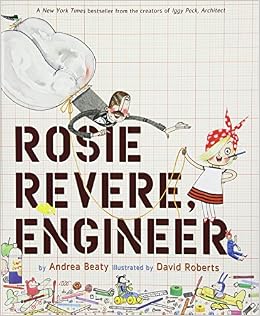
3. Rosie Revere, Engineer by Andrea Beatty
Since the first day of school, I've been working on growth vs. fixed mindset. It's surprising to me (though it probably shouldn't be) how many of my students come in to third grade believing that they are not good at math or who give up the minute something becomes challenging. When I read Rosie Revere, Engineer as well as the companion books Iggy Peck, Architect and Ada Twist, Scientist, we were able to talk about how the characters responded to the challenges they faced and how the characters didn't give up. I also love that these books include girls doing traditionally "boy" activities like inventing and doing scientific experiments.
At first, my students responded to the whimsical illustrations by David Roberts, but they were quickly drawn into the story. They were appalled when Rosie's uncle laughed at her invention, and cheered when Rosie's invention succeeded - if only for a while. The kids were eager to talk about what Rosie (and Iggy and Ada) learned over the course of the story, and long after the last page turned, these characters continue to come up in classroom discussions.
I have so many more books that my kids have loved. I have even more that I am excited to share. My students know that if there is ONE thing I am passionate about, it is books. They know that most weeks I have at least one or two new books to add to our classroom collection, and that as soon as I get them catalogued and numbered they are free to read them as often as they wish. I know that my excitement about books NEW and OLD is contagious!
Watch for my next "From my Stacks" edition in January!
My library is new. When I made the decision to move from middle school to third grade, I had to get rid of my YA library (most of which was donated to a group who will get the books into other classroom libraries) and build one appropriate for third graders. I had a LOT of help. Friends donated books to the cause. Others sent me Amazon gift cards to use to purchase books. The Scholastic Warehouse Sale was a gold mine. The work was worth it. The kids are loving the books, which was the goal all along.
Today's edition of From My Stacks will focus on three books that elicited great thinking and discussion among my third graders.
1. Gleam and Glow by Eve Bunting
Gleam and Glow tells the story of a family forced to leave their home as a result of war. As the family prepares to flee before the army arrives in their town, the children wonder what will become of the goldfish they've promised to care for. Eventually, they must leave, and with no other choice, put the goldfish in the pond near their house. Though this is a story about the war in Bosnia, it has clear connections to the wars happening in the middle east today.
I used this book when showing my students how readers listen to their "inner voices". My assistant read the story out loud while I modeled being the inner voice (I even held a thought bubble around my head as you can see in the photo), talking about my thinking as the story went on.
When we discussed the story, the kids really wanted to talk about the family and how they had to flee their home and everything they loved. They were moved by the hardship the mother and the two kids went through as they tried to get to safety and to find their father. Few of the students knew about the refugees fleeing Syria and we were able to have an age-appropriate conversation about humanity, compassion, and love. This lesson turned out to be about way more than reading comprehension.
2. Miss Paul and the President by Dean Robbins
In the lead-up to this year's election, I just couldn't bring the nastiness of the campaign into a classroom where the number one expectation is to treat others the way you want to be treated. Instead, I chose to focus on the importance of participating in the process. As a class, we had several discussions on why it is important to cast a ballot, not just in presidential elections, but also in local elections such as those for school board and city council. One of the books I shared was Miss Paul and the President by Dean Robbins. A picture book biography of Alice Paul, this book shows kids the struggle involved in getting women the right to vote. Many of my students were surprised to learn that women have been able to vote in federal elections for less than 100 years, and this book became a jumping off point to talk about why women felt they needed a voice in elections and why a vote is important. The students were very curious about the tactics the National Woman's Party used to convince the people of America, a great deal of whom did not feel women were capable of the complexity of thought to cast a ballot, to ratify the Nineteenth Amendment.
The kids' questions and comments were thoughtful and thought provoking. They ranged from disbelief that people used to think women were incapable of voting or pursuing a profession such as medicine or law to curiosity over whether or not a single vote matters so much. I will definitely use this book again, even in a non-election year.
3. Rosie Revere, Engineer by Andrea Beatty
Since the first day of school, I've been working on growth vs. fixed mindset. It's surprising to me (though it probably shouldn't be) how many of my students come in to third grade believing that they are not good at math or who give up the minute something becomes challenging. When I read Rosie Revere, Engineer as well as the companion books Iggy Peck, Architect and Ada Twist, Scientist, we were able to talk about how the characters responded to the challenges they faced and how the characters didn't give up. I also love that these books include girls doing traditionally "boy" activities like inventing and doing scientific experiments.
At first, my students responded to the whimsical illustrations by David Roberts, but they were quickly drawn into the story. They were appalled when Rosie's uncle laughed at her invention, and cheered when Rosie's invention succeeded - if only for a while. The kids were eager to talk about what Rosie (and Iggy and Ada) learned over the course of the story, and long after the last page turned, these characters continue to come up in classroom discussions.
I have so many more books that my kids have loved. I have even more that I am excited to share. My students know that if there is ONE thing I am passionate about, it is books. They know that most weeks I have at least one or two new books to add to our classroom collection, and that as soon as I get them catalogued and numbered they are free to read them as often as they wish. I know that my excitement about books NEW and OLD is contagious!
Watch for my next "From my Stacks" edition in January!
Monday, December 5, 2016
I Control the Weather
“I’ve come to a frightening conclusion that I am the decisive element in the classroom. It’s my personal approach that creates the climate. It’s my daily mood that makes the weather. As a teacher, I possess a tremendous power to make a child’s life miserable or joyous. I can be a tool of torture or an instrument of inspiration. I can humiliate or heal. In all situations, it is my response that decides whether a crisis will be escalated or de-escalated and a child humanized or dehumanized.” - Haim G. Ginott
After four years as a literacy coach, there are some things I'm relearning in my return to the classroom. This is one of those things. As teachers, it's easy to get caught up in all of the "stuff" that we need to do that may or may not be part of our work in our classrooms with our kids: attending meetings, reading (both books for kids and books for ourselves), doing report cards, filling out paperwork, reading and answering emails... the list feels endless.
And in December, the stuff feels compounded because we know we have things that MUST be finished before we leave for our two week winter break.
And on top of that, kids come back from Thanksgiving week acting as if they've never heard our classroom expectations, meaning we have to take about ten steps back and reintroduce classroom rules and routines.
One day last week, a girl in my class asked if I needed to borrow her stress ball.
This was a HUGE sign to me that I needed to step out into the hallway, take a deep breath, and re-connect with my vision of my dream classroom. I needed to clear away the fog, blow away the storm clouds, and let the sunshine break through. Last week was a clear indicator to me that the kids follow my lead. Of course they were out of sorts, trying to figure their way through a busy week - their teacher was doing the same. I was indeed stressed out, thinking of all of the tasks that had yet to be ticked off my list and worrying about what would happen if I didn't get them all done. Over the weekend, I made some promises to myself and to my students (though they don't know it):
And in December, the stuff feels compounded because we know we have things that MUST be finished before we leave for our two week winter break.
And on top of that, kids come back from Thanksgiving week acting as if they've never heard our classroom expectations, meaning we have to take about ten steps back and reintroduce classroom rules and routines.
One day last week, a girl in my class asked if I needed to borrow her stress ball.
This was a HUGE sign to me that I needed to step out into the hallway, take a deep breath, and re-connect with my vision of my dream classroom. I needed to clear away the fog, blow away the storm clouds, and let the sunshine break through. Last week was a clear indicator to me that the kids follow my lead. Of course they were out of sorts, trying to figure their way through a busy week - their teacher was doing the same. I was indeed stressed out, thinking of all of the tasks that had yet to be ticked off my list and worrying about what would happen if I didn't get them all done. Over the weekend, I made some promises to myself and to my students (though they don't know it):
- I will take time each day, even if it's just twenty minutes, to do something just for me. Self-care is often the very last line item on my to-do list, and I can tell when I don't take care of my mental and physical well-being;
- I will PRIORITIZE my to-do lists and work hard to make my daily list realistic. Just because there are 57 things I need to do over the course of a week, there's no reason to list all 57 every day. I'm the kind of person who gets overwhelmed when I have too many things to do and I become paralyzed. There's a fine line between organized and overwhelmed;
- I will breathe. I know that sounds a bit dismissive, but I do forget to slow down and take deep breaths. It's almost as if my shoulders have strings attached to them, and over the course of the day someone pulls those strings to that my shoulders end up around my ears. When I breathe, I relax and feel more like myself;
- I will SLOW DOWN and focus on the young learners in front of me. They, after all, are the reason I'm there. They'll only be in third grade once, and they're counting on me to do my best to help them learn. When I'm focused on those eighteen young people, I can't help but smile and laugh. And laughter is catching.
So I'll make it through the next two and a half weeks. We'll make it through. And we'll enjoy the weather along the way.
Saturday, August 27, 2016
Achievement Unlocked: Surviving the First Week of School
It's Saturday. I survived my first week of school. I'm tired.
But it's that good kind of tired that tells me I've worked hard, had fun, and enjoyed getting to know my eighteen third graders. This week was awesome. It was busy. It was good.
My main focus with my students this week was building community. Each day, during our Morning Meeting, our greetings were personal. Each student greeted the others by name with a firm, friendly handshake. Our sharing times were centered around our favorites: places, animals, things to do on the weekend. We wrote "Friend Wanted" ads and did team building activities that required students to work together.
We also dove right into choosing books and filling book boxes. On the very first day of school, I had books ready for kids to look at and choose from. Then on the second day, I gave them a tour of the library and went over the expectations for caring for the books and library. I'm so lucky to teach in a school district where independent reading is a daily practice from the very beginning. Most of my third graders were able to stay focused on books for 15 minutes without redirection on the very first day! I loved looking around my room and seeing this:
On the second day of school, my assistant and I began conferring with the kids, talking to them about their reading lives and their perceptions of themselves as readers. Next week as the kids begin writing more, I'll have similar conversations with them about their writing lives. I've been trying to keep my plans as flexible as a I can so that I can really tailor my introductory lessons to the kids. One of the first thing I noticed was that several of the kids appeared to be "fake reading"... just flipping pages, talking to friends, flying through books. So we had a minilesson on fake reading vs. real reading. From my conferring so far, I can see we'll need to have a lesson soon on comprehension fix-up strategies that go beyond rereading.
I've also made a concerted effort to read aloud to students as much as possible. Our read aloud novel is Fenway & Hattie by Victoria Coe. The kids are loving this funny story told from the point of view of a Jack Russell Terrier named Fenway. I read aloud while they have their morning snack, and when I finish, they always beg for more. My other daily read aloud has been a variety of picture books related to either our literacy minilesson or our teamwork challenges. The kids have loved School's First Day of School, Iggy Peck Architect, Be a Friend, and My Teacher is not a Monster. My ultimate goal is to read aloud as many different kinds of books as I can. There are so many ways to incorporate great books into the curriculum, and I worked hard to build this classroom library over the summer.
Next week is Curriculum Night, so I need to put together my parent presentation. The third grade team is also turning to our full on academic schedule. That means I can't pretend literacy studio is my whole day anymore. I have to teach math and social studies as well. Honestly, I'm glad we'll be in our daily routine for real next week. I could tell the kids were craving the routine and did much better when they knew exactly what our schedule was for the day.
In many ways, teaching this first week of third grade was a lot like teaching the first week of seventh grade. It's all about getting to know the kids, learning their quirks, setting expectations and routines, and establishing relationships with parents. The kids in third grade are shorter, they spend more time on the floor, and they give hugs.
I can live with that.
| This me, on my way to the grocery store. No makeup. Hair not done. I don't care. |
But it's that good kind of tired that tells me I've worked hard, had fun, and enjoyed getting to know my eighteen third graders. This week was awesome. It was busy. It was good.
My main focus with my students this week was building community. Each day, during our Morning Meeting, our greetings were personal. Each student greeted the others by name with a firm, friendly handshake. Our sharing times were centered around our favorites: places, animals, things to do on the weekend. We wrote "Friend Wanted" ads and did team building activities that required students to work together.
We also dove right into choosing books and filling book boxes. On the very first day of school, I had books ready for kids to look at and choose from. Then on the second day, I gave them a tour of the library and went over the expectations for caring for the books and library. I'm so lucky to teach in a school district where independent reading is a daily practice from the very beginning. Most of my third graders were able to stay focused on books for 15 minutes without redirection on the very first day! I loved looking around my room and seeing this:
On the second day of school, my assistant and I began conferring with the kids, talking to them about their reading lives and their perceptions of themselves as readers. Next week as the kids begin writing more, I'll have similar conversations with them about their writing lives. I've been trying to keep my plans as flexible as a I can so that I can really tailor my introductory lessons to the kids. One of the first thing I noticed was that several of the kids appeared to be "fake reading"... just flipping pages, talking to friends, flying through books. So we had a minilesson on fake reading vs. real reading. From my conferring so far, I can see we'll need to have a lesson soon on comprehension fix-up strategies that go beyond rereading.
I've also made a concerted effort to read aloud to students as much as possible. Our read aloud novel is Fenway & Hattie by Victoria Coe. The kids are loving this funny story told from the point of view of a Jack Russell Terrier named Fenway. I read aloud while they have their morning snack, and when I finish, they always beg for more. My other daily read aloud has been a variety of picture books related to either our literacy minilesson or our teamwork challenges. The kids have loved School's First Day of School, Iggy Peck Architect, Be a Friend, and My Teacher is not a Monster. My ultimate goal is to read aloud as many different kinds of books as I can. There are so many ways to incorporate great books into the curriculum, and I worked hard to build this classroom library over the summer.
Next week is Curriculum Night, so I need to put together my parent presentation. The third grade team is also turning to our full on academic schedule. That means I can't pretend literacy studio is my whole day anymore. I have to teach math and social studies as well. Honestly, I'm glad we'll be in our daily routine for real next week. I could tell the kids were craving the routine and did much better when they knew exactly what our schedule was for the day.
In many ways, teaching this first week of third grade was a lot like teaching the first week of seventh grade. It's all about getting to know the kids, learning their quirks, setting expectations and routines, and establishing relationships with parents. The kids in third grade are shorter, they spend more time on the floor, and they give hugs.
I can live with that.
Thursday, May 26, 2016
Onward to a New Adventure!
This year has been a difficult one - a year full of soul searching and deciding where I want to go in my career. I've spent 22 years teaching in a junior high; 18 years teaching seventh grade language arts and (part of the time) social studies and 4 years as a literacy coach. My work has been fulfilling, and I've always felt that seventh grade was the perfect grade for me. I loved the kids. I loved the books. I loved my school.
The four years I spent as a coach were also fulfilling, but in a different way. But more than that, I found coaching to be lonely and isolating. As the only instructional coach in my building, I missed the collaborative work I did with my grade-level job-alikes. I often felt like because I had a foot in teaching and a foot in the administrative side of the school, I wasn't part of either group. I decided this year that I needed to return to the classroom. I needed to be in the company of children.
So in the fall, I am moving schools within my school district. I will be teaching third grade at the elementary school my daughters attended. I am excited and a little bit terrified.
I'm excited to be part of a team again.
I'm excited to have my own classroom again.
I'm excited to only be responsible for my own teaching again.
I'm excited to be with children again.
I'm excited to plan units again.
I'm excited to be creative again.
I'm terrified of third graders.
I'm terrified of teaching math.
I'm terrified I won't know how to talk to third graders without making them cry.
I'm terrified of making new friends.
I'm terrified I won't remember how to teach.
I'm terrified I won't be a good teacher.
Those sibling feelings of terror and excitement are actually a good thing. They mean I care about the work I will be doing and the community I'll be a part of. I know I'll have teammates who will be there to help me and support me, and I'll be able to do the same for them. As a former literacy coach, I'll have tools in my toolbox that I didn't have before, and I have the benefit of having additional training in some of our district initiatives. I know I'll be fine.
Watch this space over the summer as I document my thinking about this big change. You'll see some reviews of professional books and sneak peeks of some of the things I'll be working on. I might just even float some ideas about classroom management and questions I have about the differences between third graders and middle schoolers.
It's going to be a wild ride, for sure.
Subscribe to:
Posts (Atom)